German car brands: overview, history, emblems
 The products of the German car industry embody centuries-old traditions, they are always full of innovations and meet the highest quality standards. The following factors make German cars unique:
- Quality and durability. Mercedes-Benz, BMW, Audi and Porsche are the benchmark of quality in the automotive industry. Premium materials, reliable engineering solutions and precise assembly ensure the longevity and reliability of vehicles.
- Innovation. German companies have been pioneers in the use of technologies such as anti-lock brakes (ABS), stability control (ESP), adaptive cruise control, etc. This is one of the success factors of the German car industry.
- Intelligent design and ergonomics. German car design is characterized by elegance, simplicity and a balance between aesthetics and functionality. The interior is thoughtfully designed: every control and display is positioned so that the driver can easily interact with the car without taking his eyes off the road.
- Safety. German manufacturers pay special attention to safety, introducing the most advanced driver assistance systems and passenger protection systems. These are not only passive, but also active systems.
German car brands
BMW, Audi, Mercedes - their badges on car radiators are trusted by all consumers without exception. But the German car industry is not limited to the products of only these giants. We offer you the main German brands that specialize in the production of vehicles.
Mercedes-Benz
For many, it is the best German car brand. Mercedes is, above all, a brand that symbolizes luxury and reliability. It is known for premium cars characterized by high quality, powerful engines and innovations in safety and comfort.
Founded in 1926 by the merger of Karl Benz and Gottlieb Daimler. The brand is known as one of the most prestigious brands, the first Benz Patent-Motorwagen car was produced in 1886. Mercedes-Benz was an innovator in safety and comfort, and still sets the standard for premium cars today.
Audi
Famous for its advanced technologies, dynamic design and Quattro all-wheel drive. It develops electronics and interfaces and produces cars that combine comfort and sportiness.
Audi dates back to 1909, founded by August Horch, before merging with three other companies to form Auto Union in 1932 (hence the four rings on the logo). After the war, production restarted and the brand became world-renowned for its high technology, quality and stylish design.
BMW
A German passenger car brand that is known for its "fun to drive" philosophy and that produces vehicles with excellent handling and sporty character. Innovation and driver-centeredness are key features of BMW.
The brand was founded in 1916 as a manufacturer of aircraft engines. In 1928, the company switched to automobile production, starting with small cars. BMW has become one of the leaders in the sports car industry and is firmly associated with dynamic driving and innovation.
Volkswagen (VW)
One of the largest automobile brands in the world, which produces cars that combine reliability, convenience and reasonable price.
The company was established in 1937 as a "people's car" project for mass production. The Volkswagen Type 1, or Beetle, became one of the best-selling cars in the world. Today it is the largest automobile concern, owning many brands, including Audi, Porsche, Bentley and Bugatti.
Porsche
Manufacturer of sports and high-performance cars. Symbolizes German engineering precision and is famous for models such as the 911, Cayenne and Macan.
Founded in 1931 by Ferdinand Porsche, who was also involved in the creation of the Beetle. The first car under the Porsche brand, the legendary Porsche 356, was produced in 1948. Today, the brand is known as a manufacturer of sports and luxury cars.
Opel
Known for its line of reliable, affordable vehicles. More recently produces electric cars and hybrids, offering a good combination of cost and technology.
Manufacturing was founded in 1862 as a sewing machine company. In 1899, Opel began producing automobiles. The brand became known as a manufacturer of affordable and reliable cars, and since 2017 became part of Groupe PSA (now Stellantis).
Maybach
Founded in 1909 by Wilhelm Maybach, it originally produced engines and luxury cars. After closing in the 1940s, the brand was revived by Mercedes-Benz in 2002 to produce exclusive luxury cars.
Nowadays it is a division of Mercedes-Benz, producing premium luxury cars. Known worldwide for its exclusive and luxurious cars.
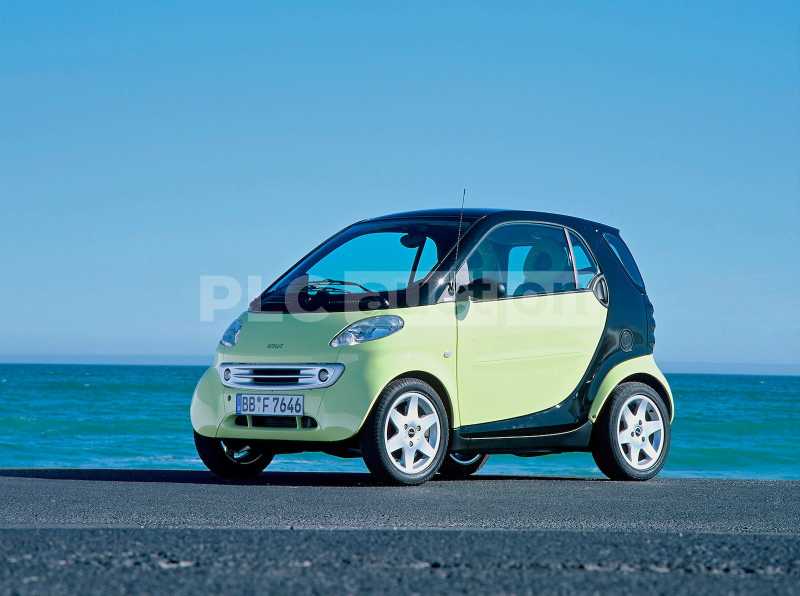
Smart
A brand specializing in compact city cars. It produces small and environmentally friendly vehicles ideal for urban use.
Established in 1994 as a joint project between Swatch and Mercedes-Benz. The brand focuses on the production of compact city cars and one of the most famous of them is the iconic Smart Fortwo.
Borgward
A brand with a rich history, revived in the 2010s. Produces cars with a strong focus on quality and innovation, combining German tradition and modern technology.
The company was founded by Carl Borgward in 1929 and produced luxury cars until 1961. Although production has been revived since 2010, their output is quite limited.
Brabus
German tuning studio engaged in tuning of Mercedes-Benz cars. It specializes in boosting powertrains, creating unique designs and exclusive options. Brabus was founded in 1977 by Bodo Buschmann.
Lorinser
Another well-known atelier specializing in Mercedes-Benz modifications. Founded in 1930 as a repair shop, it later became known as a tuning atelier for Mercedes-Benz. Lorinser creates unique designs and improves the performance of Mercedes vehicles by introducing original solutions.
Ruf
A German company that manufactures sports cars and tunes Porsche. The company is known for its unique, powerful and high-tech cars.
Founded in 1939 by Alois Ruf. The company is certified as an independent automobile manufacturer.
Sports car brands made in Germany
Brands specializing in the production of sports cars.
Wiesmann
German car brand was founded in 1988 by brothers Martin and Friedhelm Wiesmann. Wiesmann specializes in the production of sports cars in retro style, which are distinguished by bright design and powerful BMW power plants. Their models are favored for their excellent dynamics and unique appearance, in the style of classic British cars.
Apollo
Apollo Automobil was founded in 2004 and was originally called Gumpert. The brand became known for the Apollo IE (Intensa Emozione) hypercar, designed for maximum performance and extreme driving. Apollo specializes in ultra-powerful cars with avant-garde design, designed for true speed enthusiasts.
Artega
The Artega automobile manufacturing company was founded in 2006 and in the first years of its activity specialized in the production of sports cars. The most famous model was the Artega GT, a compact sports car with a center-mounted engine. The company went bankrupt in 2012, but was later revived with a focus on electric cars, including electric cars for urban use.
Melkus
Melkus was founded in 1959 and originally produced racing cars in East Germany. The brand became best known with the production of the Melkus RS1000, a sports car with a unique design. After closing in 1986, the brand was revived in 2009, but ceased operations again in 2012 due to financial difficulties.
Bitter
Founded by Erich Bitter in 1971. Bitter specializes in creating exclusive sports cars and luxury coupes based on Opel models, even the photo of which causes admiration. The brand gained popularity due to the exclusivity and attractive design of cars, although their production has always been limited.
Isdera
Isdera (Ingenieurbüro für Styling, Design und Racing) was founded in 1982 by Eberhard Schulz. The brand is known for its Isdera Imperator 108i model and limited production of unique hand-built cars with custom designs. Isdera produces exclusive sports cars and is characterized by high-tech solutions.
German brands specializing in the production of commercial vehicles
Companies that solve a wide range of problems - from producing trucks and buses, to generating engineering solutions, and developing automobiles.
MAN
German manufacturer of commercial and commercial vehicles, which began operations in 1758. The company is one of the oldest in Germany and specializes in the production of trucks, buses and diesel engines. MAN is known for the reliability of its products and is widely used in logistics around the world. The company is now part of the Traton concern owned by the Volkswagen Group.
Setra
German brand specializing in the production of premium buses. Founded in 1951 as part of the Kässbohrer company, the name is derived from the German "selbsttragend" ("self-supporting"), which reflects the design feature of the buses. Setra is associated with comfort and innovative technology in the transportation industry, offering a range of coach and touring buses.
The company, named after one of the pioneers of the automotive industry, Gottlieb Daimler, is one of the world's largest manufacturers of cars and trucks. The company was founded in 1926 when Daimler and Benz merged. Daimler now owns brands such as Mercedes-Benz and Maybach and develops both passenger cars and commercial vehicles with a focus on innovation, electrification and autonomous technology.
EDAG
German engineering company founded in 1969. EDAG specializes in vehicle development and design, and provides engineering and design services for major automakers. The company is known for its concept cars and innovations in lightweight structures, as well as advanced research in technology for the automotive industry.
Vehicle brands that are no longer in production
You already know what brands of cars are produced in Germany. Now let's talk about those companies that have stopped producing vehicles today, but played an important role in the development of many existing car brands.
Gumpert
Was founded in 2004 by former Audi manager Roland Gumpert. The brand became known for the Gumpert Apollo hypercar, a sports car with incredible power and aerodynamic characteristics designed for racing. In 2016, the management decided to rename the company to Apollo Automobil, but it still specializes in the production of high-performance hypercars.
Wartburg
The brand was founded in East Germany and is known for producing cars from 1956 to 1991 at the Eisenach plant. These cars gained popularity in socialist countries due to their affordability and simplicity of design. The name was taken in honor of the castle of the same name near the production site. Production ceased after the reunification of Germany.
DKW
German brand founded in 1916 as a manufacturer of steam engines. Subsequently, the company began producing motorcycles and passenger cars. DKW was one of four companies that merged into Auto Union (now Audi) in 1932. The brand produced popular cars and motorcycles until the 1960s, when it became part of Audi.
Lloyd
Lloyd was founded in Germany in the early 20th century and became known for producing compact and affordable cars, especially in the post-war years. Models such as the Lloyd 300 and Lloyd 600 gained popularity due to their budget cost and accessibility to the masses. Production of Lloyd cars ceased in 1963.
Wanderer
Founded in 1896, Wanderer began by manufacturing bicycles, later moving into motorcycles and automobiles. In 1932, the company became part of Auto Union, the predecessor of Audi. Wanderer produced stylish passenger cars and sports models until car production ceased in 1941.
Horch
Founded in 1899 by August Horch, the company is known for its luxury cars and high quality standards. Horch was one of the first brands to promote German luxury cars and became part of Auto Union in 1932. The brand ceased production after World War II, but its legacy lives on in the current Audi, which inherited the four-ring logo from Auto Union.
The most popular German cars
Our mini-rating includes the most popular cars of German automobile manufacturers. All the cars in the review can be purchased at the online auction - https://plc.auction/ru/auction/from-de.
Volkswagen Golf
In March 1974, the first production Golf rolled off the assembly line in Wolfsburg, and in May it arrived at dealers. A new era had dawned: for decades the market had been dominated by rear-engined cars with rear-wheel drive, but now the front-engine layout with transverse engine layout and front-wheel drive was coming into play.
The Scirocco and Passat models pioneered this approach in 1973, and with the launch of the Golf, the new technology was also introduced in the mass segment. The Golf was extremely successful due to its modern and safe drive, the functionality provided by the fifth door and folding rear seat backrest, and, of course, its attractive design. A total of 6.99 million vehicles of the first generation Golf have been sold. It is one of the most popular used cars at auction. Read more about how to buy a used car in Germany in the article - https://plc.auction/ru/posts/kak-kupit-mashinu-v-germanii.
BMW 3 Series
The third generation of the BMW 3 Series was one of the most significant steps in the model's design evolution. The body lines became more coupe-oriented, with a pronounced slope of the front and rear pillars. The roofline also took on a distinct downward angle. In addition, the third-generation cars were characterized by twin headlights mounted under a common glass cover.
The third generation BMW 3 Series offered the widest range of body styles at the time: sedan, coupe, convertible, station wagon, compact and M3.
Mercedes-Benz C-Class
The Mercedes-Benz C-Class, known by its internal code W202, made its market debut in 1993, replacing the 190E (W201) in the brand's compact car segment. The rear-wheel drive C-Class was initially offered with a four-cylinder (C 220, 147 hp) and a six-cylinder engine (C 280, 194 hp). In 1995, the C 36 AMG model with an output of 268 hp was added to the lineup, which was a reworked factory C 280 with a modified engine and a different transmission.
AMG C-Class models often share powertrains with their larger counterparts, and the advantages of fitting a powerful engine into a compact car are obvious. AMG versions of the C-Class of all generations and body styles are a real pleasure to drive and worthy of attention at all times.
Audi A4
The A4 was a completely updated version of the compact premium sedan that replaced the Audi 80. Production began in 1994. Built on the Volkswagen B5 platform, the first Audi A4 was equipped with a 1.8-liter turbocharged four-cylinder engine and front-wheel drive as standard, and offered a 2.8-liter V6 and the Audi Quattro all-wheel drive system as options. A five-speed manual transmission came as the base gearbox, and a Tiptronic automatic with manual mode was also available. In 1999, the model received a restyling: minor exterior changes, a new 30-valve V6 with a displacement of 2.8 liters and an improved 1.8T in base equipment.
Volkswagen Passat
First introduced in the 1970s, the Passat received positive feedback from buyers and has been successfully on the market ever since. The Passat tops the list of Volkswagen's most popular used sedans due to its balanced price-to-performance ratio, inexpensive maintenance, and fuel efficiency - key factors in its popularity. It is one of the most popular and widely available cars at used car auctions that you can buy in perfect technical condition. To make your purchase as safe as possible, we strongly recommend you to check the history of the car by VIN-code on a special service - https://checkcar.vin/.
The first generation Passat was produced in 1973 in the body of a two-door hatchback. The front end was characterized by a wide radiator grille with rectangular headlights and steel bumpers. The VW logo was located between the headlights.
Mercedes-Benz E-Class
Long before the term "E-Class" was coined, the role of the Mercedes-Benz compact sedan was filled by the W114/115 and W123 models in the '60s, '70s and '80s. The first generation, officially named the E-Class, was the W124, followed in 1995 by the bold and "eye-catching" W210.
For three generations and 17 model years, the E-Class had a distinctive four-headlight exterior, until the headlights merged again in 2013 after the W212 restyling, and the E-Class regained commonalities with other Mercedes sedans. The W213 generation was a new step up, getting a turbocharged four-cylinder engine instead of the atmospheric V6, and continued to be produced with restyling until the launch of the all-new W214 in 2024.
BMW 5 Series
BMW introduced the first generation 5 Series, known as the E12, in 1972. Users praised its reasonable dimensions, concise interior and reliable 3.0-liter fuel-injected inline six-cylinder engine developing 176 hp. With a four-speed transmission, acceleration to 100 km per hour took 9.7 seconds.
What really set the BMW 5 Series apart from other cars, including competitors from Mercedes, was its outstanding handling. If you combine style, build quality, handling, and performance, you get BMW. This has become the standard for cars from this German brand, not only the 5 Series, but the entire lineup of BMW vehicles.
Audi Q5
Among Audi's wide range of luxury sedans and SUVs, the Q5 ranks among the leaders. With improved fuel efficiency, advanced technology and sporty looks, the Audi Q5 remains one of the brand's most sought-after SUVs.
The history of the Audi Q5 is relatively recent - it was first introduced in 2009. Advanced technologies and a sporty body make the Audi Q5 one of the most popular Audi SUVs, including on the secondary market. During its lifetime, the model has gone through two generations, and each of them was subjected to design updates.
Porsche 911
The combination of high performance, luxury and craftsmanship makes this brand's sedans, SUVs, sports and electric cars some of the most desirable on the market. Much of the charm and mystique of the Porsche 911 lies in the fact that the company has spent decades perfecting a concept that dates back to the 1960s. The legendary "911" silhouette is easily recognizable among other cars, though it's not always easy to distinguish between generations and modifications. Even within the company, there is an entire naming language that Porsche connoisseurs understand with ease. Sure, you can recognize a new and an old 911, but being able to distinguish between generations and their versions is a skill that takes practice.
Volkswagen Tiguan
The Volkswagen Tiguan has always performed in a slightly more premium segment than the bulk of competitors like the Mazda CX-5. The first generation Tiguan, which was a two-row crossover, arrived in 2008 with a powerful turbocharged engine and a stylish interior, updated every year until the first version was completed in 2017. In the U.S., a long wheelbase variant with a small third row of seats was offered starting in 2018, making the second-generation Volkswagen Tiguan (2018-2021) one of the few compact crossovers with three rows of seats.


 Germany
 Italy
Italy
 France
 Poland
 USA
USA
 South Korea
 Belgium
 Netherlands
 Spain
Spain